More than two years have passed since October 7, 2023, and I still feel as though the world split in two on that day. There was life before it, and life after it. Everything since then has unfolded under its shadow.
At first, like so many others, I was in shock. But shock does not last forever. It turns into something much harder to explain: a constant state of alertness, grief, and uncertainty. You keep reading, watching, and listening, trying to understand what is happening as events unfold, while realizing that the assumptions you once lived with no longer hold.
That is what happened to me.
By nature, I tend to observe before reacting. I am not someone who rushes to conclusions. My instinct is to take things in, sit with them, and try to understand them before I speak. In some ways, that helped me over these past two years. It kept me grounded while so much around me felt unsteady. It kept me from being completely swept away by emotion.
But after a while, just watching it all began to wear on me. After all this time, I no longer feel as though I am just following a crisis. I feel as though I have been living inside one.
Like many people who care deeply about Israel, I found that whatever I had been working on before October 7 was suddenly pushed aside. My attention shifted almost overnight. I began following the news constantly, in Israel and in Canada, on television, radio, social media, WhatsApp groups, and online platforms I had barely paid attention to before. I wanted to know what was happening, what was true, what was being hidden, and what was being twisted.
The Story and How It Was Told
Over time, I began noticing something that disturbed me almost as much as the events themselves: the way the story was being framed.
I became much more aware of how media coverage is shaped not only by facts, but also by assumptions, language, ideology, and by what is emphasized and what is left out. Journalists often talk about balance, but I think most of us do not fully realize how much bias can shape reporting, sometimes subtly and sometimes quite openly.
I found myself asking different questions from the ones I might have asked before. Not just “What happened?” but also, “Who is telling this story?” “What words keep getting repeated?” “What context is missing?” “Whose voices are being included, and whose are being left out?”
Those questions matter. They shape how people understand the world.
One scholar I have mentioned in previous posts, Francisco Gil-White, argues that much of what people think is true comes from the media. I think he is right. If what you are being shown is distorted, your judgment will be distorted too.
History gives us a terrible example of this. Nazi Germany did not rely only on violence. It relied on propaganda, repeated so often and so forcefully that lies came to feel like common sense. Der Stürmer, one of the Nazi papers, portrayed Jews as greedy, corrupt, and dangerous. It did not merely reflect hatred. It fed it, organized it, and gave it legitimacy. Its editor, Julius Streicher, was later convicted at Nuremberg, and rightly so. Words matter. Repeated lies are never “just words.”
That feels painfully relevant now.
What shocked me after October 7 was how quickly people began minimizing it. Before the dead were even buried, and before anyone fully knew what had happened to the hostages, some were already explaining it away. In other places, people openly celebrated. And in some circles, the massacre was discussed in such detached terms that its human horror seemed to disappear.
I do not think I will ever get over that.
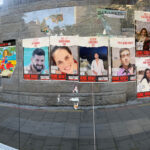
I saw this on social media, in public demonstrations, and sometimes in mainstream reporting too. Hostage posters were torn down. Jewish students were made to feel unsafe. Rallies erupted in cities around the world, often with little concern for what Israeli families had just endured. In some cases, slogans crossed the line from political protest into open hatred. In others, the hatred was less obvious, but it was there all the same.
When I was in Montreal, I listened to CBC Radio One a lot, and I often came away frustrated. Not every report was unfair, but too often the coverage felt one-sided. The Israeli side was too often pushed into the background, and Jewish fears did not seem to carry much weight. Some claims were repeated without enough scrutiny, while Israeli sources and mainstream Jewish voices were not heard nearly enough.
This has been one of the hardest parts of the past two years: not only witnessing war, but also watching how easily truth gets bent under pressure.
What Broke and What Held
Before October 7, many Israelis and many Jews in the diaspora believed that Israel’s defenses were strong enough to prevent something on that scale. That belief collapsed in a matter of hours.
The border was breached. Families were murdered in their homes. People were burned, tortured, kidnapped, and left helpless for hours. For Israelis, this was not just a military failure. It shattered the sense that the army and the government could protect their people.
And yet, at the same time, something else became clear.
I was in Israel on October 7, and what I saw in the days that followed is something I will never forget. Citizens mobilized immediately. People opened their homes. Volunteers appeared everywhere. Families sent sons, daughters, husbands, and wives into reserve duty. Almost right away, people began sending food, clothing, supplies, money, and whatever else was needed. Ordinary citizens stepped in before the official systems were fully up and running.
That response said a lot to me. It reminded me that while Israel can be wounded, it is not easily broken.
I saw something similar in the diaspora. In Montreal and elsewhere, Jewish communities mobilized quickly. There were rallies, vigils, fundraising efforts, gatherings, prayers, and endless conversations. There was fear, but there was also determination. People wanted to stand with Israel, stand with the hostages, and stand with one another.
Later, I joined the Montreal Federation Mission of Support and Witness to Israel. That experience made it all feel even more real.
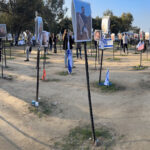
At Nir Oz, it was impossible not to feel the weight of what had happened. This had been a peaceful community, and now it stood as a place of devastation. In Sderot, seeing the footage and hearing firsthand accounts made the terror of that morning feel immediate in a way headlines never can. At the Nova site, the scale of loss came into focus not through numbers, but through the individual photographs of those murdered there, mounted on rows and rows of wooden posts, and through the silence in the middle of that rolling green space under the open sky.
But we also saw other things: mayors trying to care for displaced residents, hospitals adapting under wartime pressure, universities developing practical tools to respond to trauma and dislocation, volunteer centres operating at full speed, and farms relying on volunteers because so many regular workers were gone. Again and again, what stood out was not only suffering, but the determination to keep going.
That is one of the truths I most want to hold onto. Israel is not only a country at war. It is also a society in which people keep showing up for one another, even when they are exhausted, grieving, and afraid.
The Names We Carried
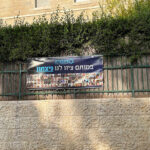
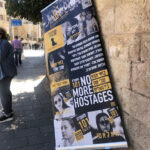
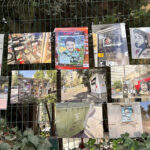
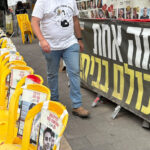
For a very long time, the hostage crisis weighed heavily on Jewish communities. Their faces were everywhere. Their names were spoken in synagogues, at rallies, around dinner tables, and in private prayers. Families travelled across countries and continents, pleading for attention and action. In Montreal, too, regular weekly public marches and gatherings made sure they were not forgotten.
Over time, the story changed. Some hostages came home alive. Others did not. Some families were reunited. Others were left with unbearable loss. But even as the details changed, the anguish never really lifted. The hostage crisis was not just a political issue. It became a shared wound.
And alongside all of this has been the grief of war itself: soldiers being killed, civilians traumatized, families uprooted, and children carrying far more than they should. The losses keep coming, and even when the news moves on, the pain does not.
What Has Kept Me Going
More than anything else, it has been my Jewish identity that has kept me going through all of this.
I do not mean that in a vague or superficial way. I mean that Jewish memory, Jewish practice, Jewish community, and Jewish faith have helped keep me steady at a time when so much has felt shaken. When this crisis began, our rabbis urged us to strengthen Jewish life through prayer, psalms, mitzvot, and acts of loving-kindness. That was wise advice. In times like these, action matters, ritual matters, and community matters. They help keep despair from taking over.
I also keep thinking back to a trip I took just before all this broke, with my Montreal congregation and Rabbi Poupko, to Poland. We visited major Jewish historical sites, the concentration camps, and many other places marked by horror. Rabbi Poupko and our guide, Tzvi Sperber, helped us understand not only the destruction, but also the richness of Jewish life that had existed there for a thousand years before the Nazis destroyed so much of it.
That memory has become even more important to me since October 7. Jewish history is full of horror, yes, but also of survival, rebuilding, and the determination to go on. We are here because earlier generations lived through what should have destroyed them and somehow carried life and tradition forward anyway.
That knowledge has given me strength.
Still Living in the Aftermath
As I write this in March 2026, I do not feel that October 7 is behind us. Its consequences are still unfolding. The region remains unstable. The arguments are still with us. The grief is still with us, too. And the old confidence is gone.
But something else remains, too: solidarity, courage, and the refusal to surrender our humanity.
The world before October 7 is gone for me. I see things now that I did not fully see before. I understand more clearly how fragile safety can be, how quickly antisemitism can rise to the surface, how easily truth can be twisted, and how important it is not to lose your balance.
And yet I also see more clearly the strength of ordinary people, the depth of Jewish resilience, and the enduring power of belonging to a people who refuse to disappear.
That is where I find myself now: saddened, changed, more alert than before, but still standing. And still believing, despite everything, that we do not give up on one another. That is what remains with me now.
Am Yisrael Chai. The Jewish people live.
Sources and References
Der Stürmer, Nazi weekly paper vilifying Jews, USHM United States Holocaust Memorial Museum, Holocaust Encyclopedia
encyclopedia.ushmm.org/tags/en/tag/der-sturmer
Julius Streicher, editor of Der Stürmer, USHM United States Holocaust Memorial Museum, Holocaust Encyclopedia
encyclopedia.ushmm.org/content/en/article/julius-streicher-biography
NGO Monitor, founded in 2002, is a globally recognized research institute that analyzes NGOs for whether they promote democratic values and good governance, a project of The Institute for NGO Research, a recognized organization in Special Consultative Status with the UN Economic and Social Council since 2013
ngo-monitor.org
HonestReporting, an NGO that monitors the media for biased reporting about Israel
honestreporting.com
MEMRI, an NGO that monitors Arab-language media, which is often very different from Arab English-language media such as Al Jazeera
www.memri.org
On CBC coverage and media framing
honestreporting.ca/petitions/cbc-news-report-repeats-unrwa-hamas-casualty-data-as-facts-not-as-wartime-propaganda
honestreporting.ca/petitions/cbc-news-article-downplays-israeli-aid-into-gaza-exclusively-quoting-anti-israel-voices
Washington rally video
www.youtube.com/watch?v=cUjClJAZVW0
IDF memorial page for fallen soldiers
www.idf.il