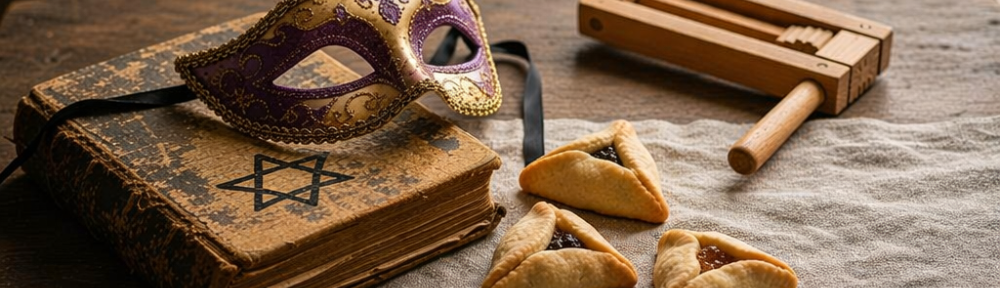
Today is Purim.
A holiday of masks, reversals, political intrigue, and survival.
This year, I am sharing two powerful articles in French written by my friend Sonia Sarah Lipsyc that were published in partnership with the Montreal Holocaust Museum and Tenoua. Sonia explores an often-overlooked aspect of the Shoah: the role of religious resistance during the Shoah.
You can read them here:
- Series: Jewish religious resistance during the Holocaust
- Purim: Jewish religious resistance during the Holocaust
We are familiar with stories of armed uprisings and resistance fighters. But what does defiance look like when it takes place through prayer? Through ritual? Through the insistence on keeping the Jewish calendar?
Sonia examines how Jews, in ghettos and camps across Europe, continued to observe Purim under circumstances that would seem almost impossible.
The Nazis did not seek only to kill Jews. They sought to wipe out Jewish life, its memory, its learning, its identity. In that kind of world, even the smallest religious act became a form of defiance.
Purim is not just a children’s story. The Book of Esther begins with a political argument: “There is a people scattered among us; their laws are different, and they do not quite belong.” (Esther 3:8) We have heard that argument before.
And yet, in the Scroll of Esther, the Megillah, God’s name is never mentioned. What we see instead are royal commands, power struggles, and a climate of fear.
For Jews living through the Shoah, the threats were not symbolic. They were very real.
Sonia describes how Purim helped many Jews understand their situation. Some rabbis went further. They said that in those years, simply surviving as a Jew was no small thing. That was the resistance the circumstances demanded. And yet many defied everything to keep their sacred holidays, prayers, and rituals.
What does it mean to choose life when everything around you says die?
How do you read Esther and speak about joy in the Warsaw Ghetto?
What does faith look like then?
Sonia thanks me at the end of her articles. In truth, I am grateful to her. Her work reminds us that resistance is not always dramatic or visible. Sometimes it is quiet and deliberate. Sometimes it is simply refusing to deny who you are.
I invite you to read Sonia’s work in full. It is researched, moving, and unsettling in the best way.
Purim Sameah.