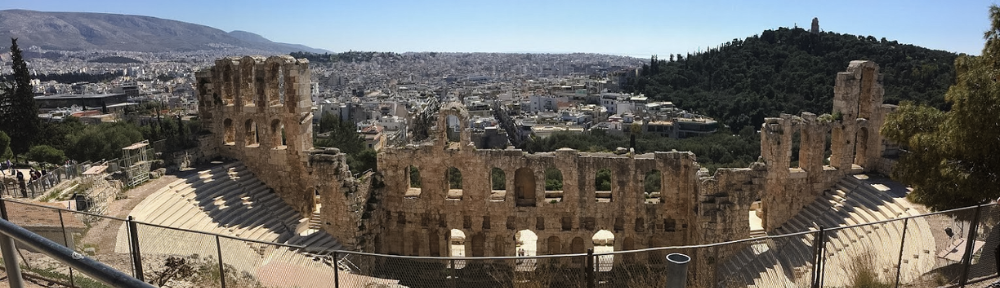
The other day, I came across a documentary series on television called Gladiators: Warriors of the Ancient World, about the history and culture of ancient gladiators. It is also available on YouTube.
I watched the episode about Commodus, and it felt oddly relevant.
Commodus is often remembered as a mad Roman emperor, and with good reason. Ruling Rome was not enough for him. He wanted to be admired as more than a man. He wanted to be seen as a supernatural being, a “superman,” a Roman god.
He stepped into the arena and turned the vicious gladiatorial games into a form of theatre serving his own power. These brutal contests, in which men, mostly slaves captured in foreign lands, were pitted against lions and tigers, often ended in the slaves’ deaths. Although such contests had always carried a political dimension, one that cast the slave as inferior to the beast, Commodus reshaped the arena into a staged display of his own prowess and superiority. He was no longer merely the Roman emperor. He presented himself as a God, an all-powerful victor.
We may like to think that some parts of life are ‘just entertainment,’ as if that makes them harmless or neutral. But entertainment is never just entertainment. It shapes emotion, loyalty, memory, identity, and the way people see the world. Once it does, politics is already in the room.
The stage as an instrument of power
Commodus understood how to use public entertainment to strengthen his image. The arena was not simply there to entertain the crowd. It became a stage on which he displayed his power, strength, image, and control.
Rome’s governing elites were appalled and eventually decided they had had enough. They first tried to have him poisoned by his mistress. When that failed, he was strangled by an elite wrestler. That was the end of Commodus.
But the larger point remains. Rome understood something we still wrestle with today: public entertainment can never be fully separated from politics.
The myth of neutrality in sport
This is why I find it hard to take seriously the old claim that sports are “not political.”
The Olympics, for example, are often presented as a celebration of human excellence, national pride, and peaceful competition. And yes, of course, they can be that. But they are also wrapped up with symbolism, rivalry, money, national image, and power. We are often told that the Olympics rise above politics, yet reality keeps proving otherwise.
International sport is one of the clearest places to see the overlap between entertainment and politics. The athletes are competing, but whole countries are invested in what happens. Governments celebrate the medals. Protests and boycotts are never far away. And there always seem to be questions of money and influence. Even the word “neutrality” is slippery, because someone always has to decide what can be said, shown, or protested.
Ancient Rome had its arena. We have ours.
The costumes have changed, but the ideas are not so different.
When music carries history
What about music?
Music is often described as a universal language, and there is truth in that. It reaches people across cultures and borders. It can move us before we have even figured out why. But that does not make it separate from politics. More often than not, music is shaped by the history people have lived through.
I was reminded of this by a CBC Ideas program, Iranian Musicians: On the Power of Music in Times of Crisis. The musicians interviewed were Iranian émigrés, and what came through so clearly was how deeply history, exile, and cultural memory shape the music they make. Their work is not just performance. It tells the story of where they come from, what they have lost, and what they refuse to forget.
That is what music so often does. It carries the past into the present.
I thought of that again when a friend told me about attending a Shen Yun dance performance in Toronto. Whatever one thinks of the production, it is clearly more than dance for its own sake. It presents an unapologetically political vision of pre-Communist China. The choreography may be beautiful, but it is also making a point about history, culture, and national identity.
Art does not stop being political because it is elegant.
Think of the old hymn “Onward, Christian Soldiers.” Music has long carried not just belief, but also power and ideology.
Memory, continuity, and identity
The same is true in Jewish music.
Back on December 31, 2020, I wrote about Music and the Cantorial Art. Cantorial art is Hebrew prayer set to music and chanted by the synagogue’s prayer leader, the chazan. Some of the melodies are prescribed, while others may vary according to the chazan’s choices. Jewish music, too, is much more than something beautiful to listen to. It carries memory, continuity, prayer, sorrow, joy, and collective identity. It binds generations together. It reminds people who they are.
That too is political, though not in the way we usually use the word. It is about survival, memory, and belonging.
I was reminded of that again one morning when I heard about n10.as, an international, volunteer-run internet radio station broadcasting from Montreal and now entering its tenth year. There is no government money and no large organization behind it. Just people keeping music from around the world on the air because it speaks to them. To me, that carries a broader message about how different cultures can intersect and harmonize.
The same is true of Irving Berlin. Born Israel Beilin, the son of a poor Jewish immigrant family, he had no formal musical training and could not even read music. Yet he went on to write hundreds of iconic songs that became part of the canon of American civic life, including “God Bless America,” “There’s No Business Like Show Business,” and “White Christmas.”
There is something moving in that. Irving Berlin reminds us that people do not need polished beginnings to create music that touches something universal in all of us.
This points to something more hopeful. It suggests that music has the potential to create peaceful connections across cultures. It can bring people together rather than set them against one another.
At its best, that begins to resemble what Jews sometimes speak of as the messianic world to come: not a world where everyone is the same, but one where differences need not lead to conflict and war.
What awards really reward
Then there is film.
We have just come through another Oscars season, and once again, people are asking whether the Oscars are political. Some clearly think so. Out of curiosity, I typed a related question into Google: Are the Oscars “woke”?
What came back was page after page of opinion pieces, complaints, and reactions. One example was a Sky News Australia segment titled, “Oscars descend into woke clown show as celebrities lose touch”.
Whether one agrees with that view is beside the point. The real point is that very few people see the Oscars as separate from politics. These awards are not just about who gave the best performance or wrote the best script. They are also about what a culture wants to honour, what it wants to say about itself, and which stories it chooses to elevate.
That is why people care so much. They are not only arguing about movies; they are arguing about the culture that produces and celebrates them.
When news becomes performance
And then we come to journalism, which has been a pet peeve of mine for years.
Is journalism entertainment?
With the rise of 24/7 television and radio, journalism has had little choice but to become more entertaining, even at a cost. It has to hold attention. It has to compete with everything else demanding people’s attention. It has to compete with everything else in the media environment. Under that kind of pressure, the news itself can begin to change.
Stories become more dramatic, personalities take precedence, and anger keeps viewers engaged. Loose speculation may be treated as fact, and conspiracy theories, once confined to the fringes, can become highly profitable.
Examples are not hard to find. Tucker Carlson and Candace Owens are two conservative media personalities who readily come to mind. Both built large audiences through right-leaning platforms. Carlson became widely known on Fox News before leaving in 2023. Owens hosted a PragerU show from 2019 to 2021 and now runs her own podcast. Both have attracted controversy for giving a platform to people who espouse antisemitic conspiracy theories and echo lines associated with Al Jazeera, the Qatar-funded network. That impression was reinforced in December 2025, when Carlson said at the Doha Forum in Qatar that he planned to buy property there, presenting it as a statement of personal independence. The remark drew further scrutiny because Qatar funds Al Jazeera and has long faced criticism over its ties to Hamas and Islamist movements such as the Muslim Brotherhood.
In a society that values free speech, I do not agree with shutting them down, but they both illustrate how easily journalism can blur into performance and politics.
That is one reason it has become harder to tell where news ends and entertainment begins. People are not just watching for facts. They are also watching for outrage, reassurance, and the feeling that their side is being affirmed.
And once journalism starts operating like entertainment, politics does not just enter the newsroom; it begins to shape the whole narrative and can corrupt the craft of journalism.
The real question
So what is the connection between sports, music, film, journalism, and politics?
All of them shape the way people see the world. All of them attract audiences, stir feelings, and influence how people see themselves and others. All of them carry stories about power, belonging, memory, and who gets taken seriously.
That is why they can never be fully neutral.
Sometimes they glorify power, as with Commodus. Sometimes they preserve memory and identity, as in Jewish and Iranian music. Sometimes they create real connections, as with N10, the radio station, and Irving Berlin’s songbook. Sometimes they become battlegrounds for culture and values, as with the Oscars or modern media.
But in every case, the political element is there.
The real question is not whether entertainment is political.
It is.
The real question is what kind of political entertainment is advanced, and who benefits.